INTERNATIONAL INSTITUTE OF VOTEROLOGY [IIV]
“Voters above all else”
INTERNATIONAL VOTEROLOGY DAY – 03 APRIL
Voterology → Democracy → Good Governance → Peace
No Voterology → No Democracy → No Good Governance → No Peace
Voter is above all. Voterology is the Master Key.
Voterology explains; Voterologism implements.
Good Voters → Good Leaders → Good Governance → Global Peace
Careless Voting → Corrupt Leaders → Poor Governance → No Peace
Democracy, Good Governance and Global Peace cannot survive without Voterology
VOTEROLOGY
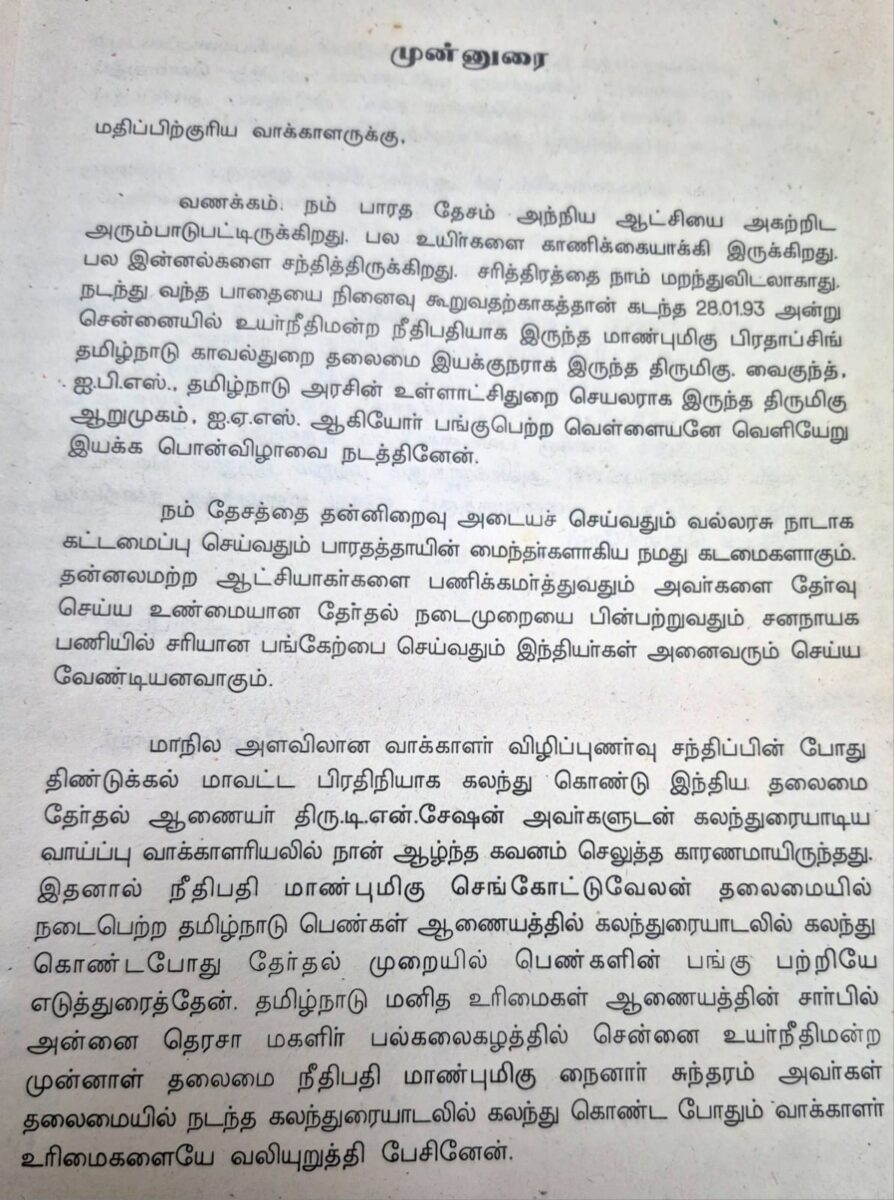
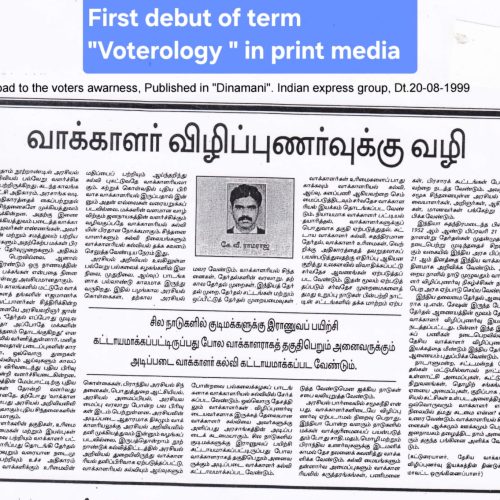
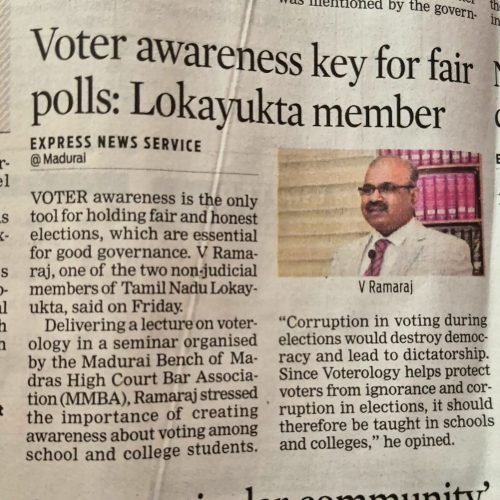
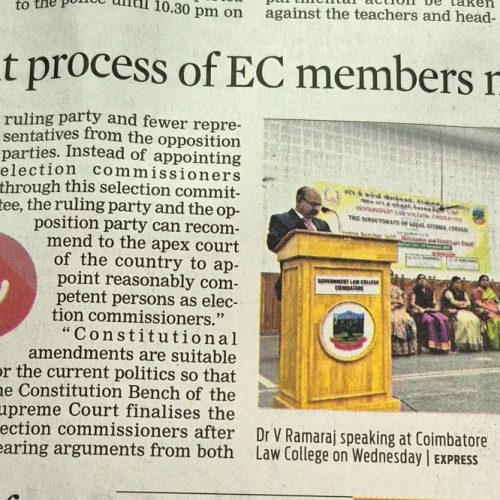
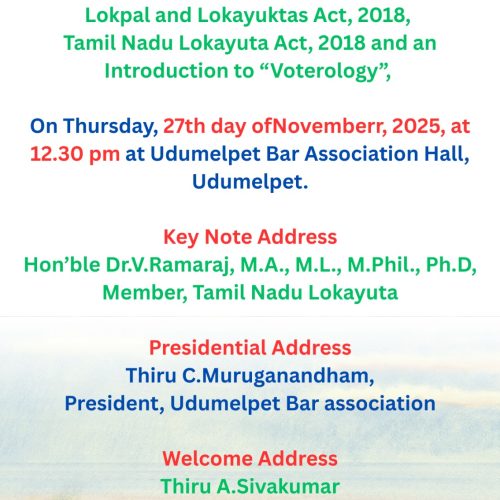
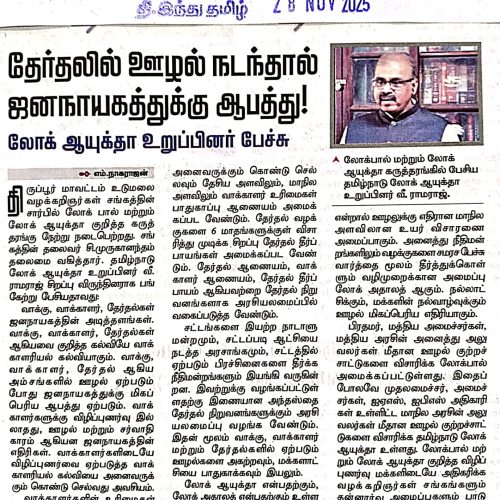
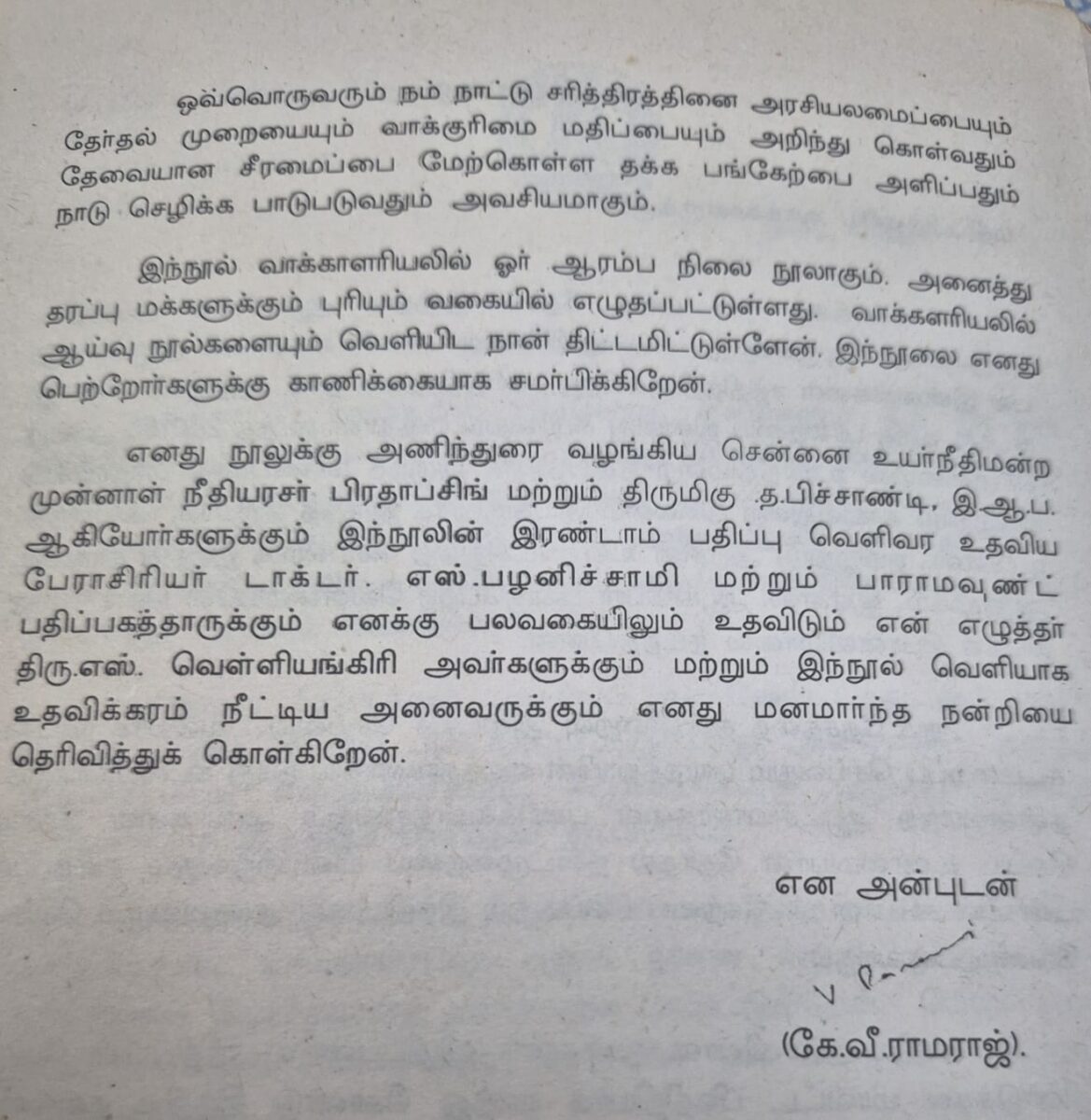
The term “Voterology” was coined by Dr. V. Ramaraj and the term has made its debut in a book named “Respectable Voter” in 1996 and an article at Dinamani, a Tamil daily on August 20, 1999. The concept of “Voterology” became better known after a report in the “The Hindu” daily, “The New Indian Express” daily and “Times of India” daily on October, 13, 2025, November 6, 2025 and November 7, 2025 respectively.
“Voterology” is a portmanteau (a blend of words) of “voter” and “ology”, originates from the Greek logia. “Voter-”: Pertains to voters or who cast vote in an election, “-ology”, is a suffix used to denote a subject or study or branch of knowledge. (e.g., sociology, biology). Each voter participates in the elections by casting their vote, in which the concepts “vote, voter, and elections” are fundamentally connected, and these concepts create a cognitive framework, very appropriate to refer to these terms collectively as “Voterology.”
Dr. V. Ramaraj defines that “Voterology is an interdisciplinary academic discipline devoted to the systematic and scientific study of votes, voters, and elections as essential components of constitutional democracy. Voterology places the actions, will, and opinions of voters at the centre of democratic governance. It is both an academic and practical approach to promoting genuine democracy, good governance, and global peace.”
Aim
The aim of Voterology is to develop theories, principles, doctrines, and analytical frameworks through an interdisciplinary approach integrating Law, Political Science, Public Administration, History, Sociology, Psychology, and Journalism & Mass Communication, in order to:
- Advance understanding of the constitutional and democratic significance of the vote;
- Promote voter education, awareness, participation, and empowerment, and encourage informed voting;
- Strengthen free, fair, transparent, credible, and inclusive electoral processes;
- Strengthen democratic institutions and mechanisms of accountability; and
- Contribute to the advancement of genuine democracy, good governance, and global peace.
VOTEROLOGISM
The term Voterologism” was also coined by Dr. V. Ramaraj and the term has its debut in a news item at The New Indian Express and Times of India, English dailies on November 06, 2025. The term Voterologism is a neologism derived from “Voterology” using standard morphological principles of the English language. It is a portmanteau of “-Voterology (Root)” and “-ism”, a suffix added to nouns to denote a specific practice, system, philosophy (e.g., capitalism, liberalism). The English suffix -ism originates from the Ancient Greek suffix -ισμός (-ismós), which was used to form nouns of action, state, or doctrine. By stripping the “-ogy” and applying “-ism,” the term shifts from the study of the subject to the practice or ideology associated with it. In practice, Voterologism typically describes a philosophy or system centered on the primacy of the act of voting or the specific mobilization of voters as the core driver of political change.
Dr. V. Ramaraj defines that Voterologism is a democratic ideology derived from the principles, theories, and doctrines of Voterology. It serves to disseminate and promote the ideas, values, and principles of Voterology, with its central tenet being: “Voters Above All Else.”
Its primary objective is to disseminate those principles among citizens, political parties, educational institutions, policymakers, and democratic institutions in order to strengthen electoral democracy, constitutional governance, ethical public administration, and global peace. Voterologism is intended for individuals, political parties, public institutions, and civil society organizations that are committed to the principles of electoral democracy. Voterology provides the philosophical and academic foundation, a school of thought, whereas Voterologism represents the ideology and movement derived from that foundation.
VOTEROLOGIST
A Voterologist is an expert, scholar, or researcher who conducts systematic and scientific research in the field of Voterology. A person who advocates, promotes, or advances the principles and ideology of Voterologism may also be designated as a Voterologist.
The International Institute of Voterology may confer the title of Voterologist periodically in both categories. Applications for the conferment of the title will be invited through the official website of the Institute, and eligible and interested persons may apply in accordance with the prescribed criteria.
The term Voterologist is derived from Voterology. It is formed by combining the root “Voterology” with the English suffix “-ist.” The suffix “-ist” derives from the Greek “-istēs,” denoting a person who practices, follows, advocates, or is associated with a particular doctrine, discipline, activity, or field.
Thus, the term Voterologist denotes a person associated with the study, practice, advancement, or promotion of Voterology and, in the appropriate context, the principles of Voterologism.
VOTEROLOGY: SCHOOL OF THOUGHT
Voterology aims to develop a distinct school of thought within the social sciences by establishing its own philosophical foundations, theories, doctrines, principles, concepts, and methodologies. It aspires to provide a new framework for understanding democracy through the centrality of votes, voters, and elections. By integrating insights from multiple disciplines, it seeks to create an independent intellectual tradition within the social sciences.
FATHER OF VOTEROLOGY
Dr. V. Ramaraj has championed the establishment of “Voterology” as an independent academic field distinct from political science Study of Votererolgy: Dr. V. Ramaraj coined the term “Voterology”, defined the concept, established its doctrines and developed “Voterology” as a distinct field of study. Philosophy of Voterologism: Dr. V. Ramaraj advanced the school of thought known as “Voterologism”. Father of Voterology: In 2000, during a meeting of organizations in the National Voter Awareness Campaign, he was conferred with the title “Father of Voterology” for his work in founding and promoting the discipline “Voterology” and the philosophy “Voterologism,” since 1996. On April 03, 2020, he founded the International Institute of Voterology(IIV) and served as its first President until March 20, 2022.Dr. V. Ramaraj has dedicated almost 30 years promoting Voterology. He started advocating in 1996 for the subject to be acknowledged as a distinct academic discipline separate from general political science. After three decades only, Voterology is beginning to gain recognition gradually in 2025. Read More
WHY SHOULD "VOTEROLOGY" BE A DISTINCT FIELD?
Dr. V. Ramaraj has been advocating the development and recognition of “Voterology” as a distinct academic discipline since 1996, focusing on the systematic and scientific study of votes, voters, and elections. In support of this proposition, Dr. V. Ramaraj presents the following ten principal justifications for the emergence of Voterology as a distinct academic field:
- Historical Transformation of Society – Modern constitutional democracy has shifted political authority from rulers towards the consent and participation of citizens through elections and voting.
- Evolution of Academic Disciplines – Academic disciplines develop and differentiate when changing social realities create new areas of knowledge requiring specialized study. Voterology represents such a development in the age of electoral democracy.
- Constitutional Centrality of the Vote and the Voter First Policy – The vote is a principal means through which popular sovereignty is expressed. Voterology therefore places the voter, the voter’s rights, dignity, informed choice, and democratic participation at the centre of its inquiry.
- Breadth and Complexity of Electoral Studies – Votes, voters, and elections involve a wide range of subjects, including electoral law, election administration, voter education, electoral integrity, political parties, voter psychology, electoral communication, and democratic governance. Their breadth warrants specialized academic study.
- Interdisciplinary Necessity – The vote is simultaneously a constitutional right, legal instrument, political choice, social act, psychological decision, administrative process, statistical phenomenon, and expression of democratic participation. Voterology integrates knowledge from multiple disciplines to understand these interconnected dimensions.
- The Voter-Centred Gap in Existing Disciplines – Existing disciplines study different aspects of democracy and elections, but the voter is generally not their defining and organizing centre. Voterology seeks to fill this gap by making the voter its primary subject of inquiry.
- Distinction from Psephology – Psephology primarily examines voting behaviour, electoral data, patterns, and outcomes. Voterology adopts a broader voter-centred approach concerned with voter rights, education, empowerment, protection, participation, electoral integrity, and democratic legitimacy.
- The Need for Applied Democratic Knowledge – Voterology seeks to transform theoretical knowledge into practical democratic reforms, including voter education, electoral integrity, electoral justice, democratic participation, institutional strengthening, and good governance.
- The Need for New Theories and the Emergence of Voterologism – Contemporary democracy presents new challenges requiring new theoretical perspectives. Voterology seeks to develop voter-centred theories, principles, doctrines, and methodologies, while Voterologism represents the democratic ideology derived from and advancing these principles.
- Democracy, Good Governance, and Peace – By promoting informed voting, strengthening electoral legitimacy, protecting electoral integrity, and encouraging peaceful transfers of political power, Voterology seeks to contribute to democratic stability, good governance, and ultimately peace.
CORE THEMATIC AREAS OF VOTEROLOGY
- Theoretical and Philosophical Foundations
- Global Electoral Governance and Comparative Electoral Systems
- Election Administration, Management, and Electoral Integrity
- Electoral Law, Electoral Justice, and Election Crimes
- History and Evolution of Elections
- Voter Education, Empowerment, and Knowledge Building
- Political Parties, Movements, Electoral Strategies, and Campaigns
- Voter Psychology, Electoral Sociology, and Voting Behaviour
- Voter-Centric Journalism and Electoral Communication
- Democracy, Good Governance, and Peace in Voterology
TEN THEORIES OF VOTEROLOGY
Dr. V. Ramaraj, the pioneer of Voterology, has notably articulated “The Ten Theories on Voterology” in 2020. He has structured the theories regarding Votes, Voters, and Elections, three dimensions of democratic institutions.
1. Theory of Supreme Electoral Authority
The electorate collectively possesses supreme electoral authority in a constitutional democracy. The vote is the constitutional instrument through which governmental authority is created, legitimized, renewed, limited, and ultimately terminated. All democratic governmental authority derives its legitimacy from the freely expressed electoral will of the people.
2.Theory of Vote-Based Democracy
The vote is not merely a political act but a constitutional instrument through which citizens determine the exercise of governmental power. Elections based on voter ignorance, inducement, manipulation, or corruption may produce only Nominal Democracy, whereas elections based on clear ideology, policies, and public welfare can establish True Democracy. The integrity of the vote, voter, and election determines the strength of democracy.
3.Theory of Voters First
“Voters Above All Else” should be a foundational principle of democratic governance. Voters must be empowered and protected through knowledge, education, rights, and equitable access to political, social, economic, civil, cultural, and legal opportunities. The voter is not merely a participant in democracy, but its central subject, ultimate sovereign, and primary beneficiary.
4. Theory of Shared Voter Responsibility
Voters share responsibility for protecting the integrity of democracy by eliminating voter ignorance, resisting monetary inducements and corrupt practices, and making informed electoral choices. Their responsibility does not end with casting a vote; they must also monitor governments and the performance of elected representatives. Informed and responsible voters are essential to preventing corruption, authoritarianism, and democratic decline.
5. Theory of Modern Five-Branch Separation of Powers
The traditional three-branch model of separation of powers is insufficient for modern constitutional democracy. Election Management should be recognized as a distinct Fourth Branch, while specialized integrity, accountability, regulatory, investigative, and adjudicatory institutions may constitute a Fifth Branch. This structure can strengthen institutional independence, constitutional accountability, democratic integrity, and citizens’ rights.
6.Theory of Functional Separation of Powers in Election Management
Electoral functions should not be excessively concentrated in a single institution. Electoral rolls, election conduct, political-party regulation, voter-rights protection and education, election dispute resolution, and Voterological research require appropriate institutional specialization, independence, coordination, and accountability. Functional separation can prevent excessive concentration of electoral authority and strengthen free, fair, transparent, and credible elections.
7.Theory of International Electoral Governance
The integrity of elections and the protection and empowerment of voters are matters of international democratic concern. International institutions should develop standards, cooperation, capacity-building, comparative research, and institutional support while respecting national constitutional sovereignty. International electoral governance should strengthen, rather than replace, national electoral institutions and promote free, fair, transparent, credible, and inclusive elections.
8.Theory of State Responsibility for Voterological Education
The State has a fundamental responsibility to provide systematic, universal, and continuous education concerning votes, voters, elections, democratic institutions, and citizens’ roles in governance. Voterological education should extend beyond election-time awareness and enable citizens to understand, exercise, protect, and continuously give effect to their vote. Recognizing Voterology as a field of study can strengthen informed and people-centred democracy.
9. Theory of Voterologism as a Democratic Movement
Voterology is the interdisciplinary and scientific study of votes, voters, and elections, while Voterologism translates Voterological knowledge, principles, and values into democratic practice and social action. It places the voter at the centre of political accountability, democratic governance, and people’s welfare. Voterologism may function simultaneously as an ideology, philosophy, practice, system, and peaceful democratic movement.
10.Theory for Ensuring True Democracy, Good Governance, and Global Peace through Voterology
True democracy, good governance, and global peace are strengthened when voters are informed, empowered, and able to exercise their votes freely, responsibly, and meaningfully. Voterology provides the intellectual pathway, while Voterologism provides the ideological and practical pathway toward these objectives. Together, they seek to strengthen democratic institutions, protect citizens’ rights, promote people’s welfare, and contribute to sustainable global peace.
HISTORICAL CONTEXT
The term “Voterology” made its debut in Dr. Ramaraj’s book “Respectable Voter” (Tamil) in 1996.
- The term “Voterology” gained wider recognition through an article in the Tamil daily Dinamani on August 20, 1999.
- Dr.V.Ramaraj was officially conferred the title “Father of Voterology” at a gathering of organizations involved in the Indian National Voter Awareness Campaign in 2000.
- From 2000 to 2024, Voterology was gradually developed within small advocacy groups solely in Tamil Nadu.
- International Institute of Voterology was founded by Dr.V.Ramaraj on 03 April, 2020.
- The concept of “Voterology” became better known after a report in the “The Hindu” daily, “The New Indian Express” daily and “Times of India” daily in 2025.
The term “Voterologism” has its debut in a news item at The New Indian Express and Times of India, English dailies in 2025.
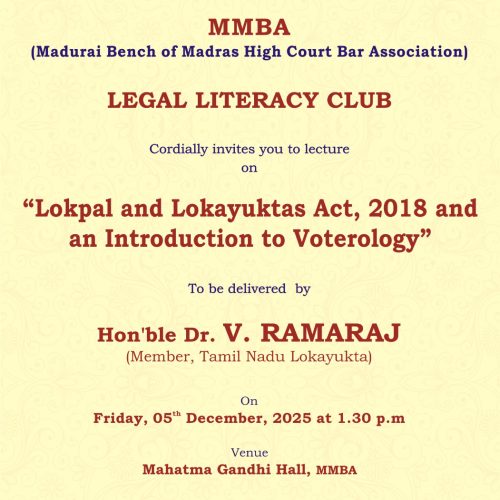
- The first formal seminar “Introduction to Voterology” was held at Madurai, organized by Madras High Court Madurai Bench Bar Association in 2025.
- In 2025, Dr. V. Ramaraj advanced the study of Voterology and the philosophy of Voterologism through his lectures at seminars of colleges and bar associations among the students and advocates respectively.
- The Journal of Voterology and Research (JoVaR) was formally launched to promote academic study and research in Voterology in 2025.
COMPARATIVE ANALYSIS
Dr. V. Ramaraj has firmly asserted that Psephology and Voterology are not identical, and additionally, he has contended that Psephology ought to be included in Voterology. He has offered the subsequent comparative assessment.
| Feature | Voterology | Psephology |
| Primary Goal | To create a “Voters Above All Else” philosophy (Voterologism). A prescriptive and protective goal. | To forecast or explain election results and trends within the existing framework of democratic processes. |
| Kind | It is an ideology. Voter-centric (rights, ethics, participation). | It is a statistical analysis. System-centric (laws, parties, statistics). |
| Focus | It is more normative and reform-oriented. Broader than psephology, emphasizing the human, institutional, and moral aspects. | It views the voter primarily as a data point within a larger trend to determine who will win and why. |
| Core Tools | Voterological doctrines, rights advocacy, and legal frameworks to protect voter interests. | Opinion polls, exit polls, historical voting data, and campaign finance information. |
| Scope | Expansive, aiming to address the deeper issues within a democratic institution, such as voter ignorance, corruption, and authoritarianism. | Often narrower, focused on data analysis to predict or understand election outcomes. |
| Methodology | Utilizes qualitative and quantitative research. | Mainly relies on data, polling information, and statistical modeling to analyse elections. |
| Discipline | Voterology is an interdisciplinary field that includes political science, history, economics, law, sociology, psychology and data analytics. | It is a multidisciplinary field that combines elements of political science, sociology, history, mathematics, and statistics. |
| Thematical Areas | Foundations of Voterology, History of Vote, Voters and Elections, Voterology of Modern Democracy, Governance and Peace, Sociological and Psychological Perspectives, Electoral Policy, Law and Justice, Global Election Systems, Comparative Systems, Knowledge Building and Empowerment of Voters, Urban and Rural Voterology, Political Movements, Voterological Journalism. | Voting Behavior Analysis, Electoral Systems and Reform, Public Opinion Research, Election Forecasting and Prediction, Electoral Geography, Party Systems Analysis, Media and Campaign Effects. |
| Perspective | Statistical / Scientific | Social / Reformist |
| View of Voter | A power-holder to be educated | A statistic to be predicted |
| End Product | Empowering voters and safeguarding true democracy | Result predictions and data analysis |
| Sub-field | To be separated from Political Science and recognized as an independent discipline. | To be separated from Political Science and added as sub-field of Voterology. |
| Father of the Field | Dr. V. Ramaraj, India | Sir David Butler, United Kingdom |
Voice
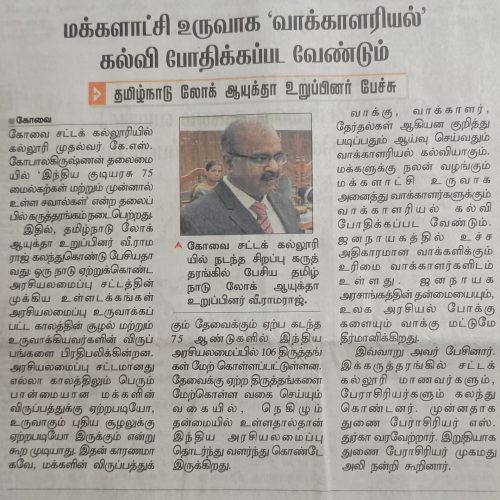
- “Mr. Ramaraj said that reading and researching votes, voters and elections is called voterology. Political science and voterology are both sides of a coin, but political science is taught in more than 1000 universities across the globe, while less than one percent of universities have courses on democracy and election administration.” “Vote, voter and elections are three equal dimensions of democratic institutions and these values required to determine the standards of democratic institutions. Voters’ ignorance, corruptionand authoritarianism are forces that pose a threat to the three dimensions of democratic institutions” Mr Ramaraj added. – The Hindu, English daily, 13 October 2025, Coimbatore Edition.
- Ramaraj said, “Voterology is study and analysis of votes, voters and elections. The central idea of voterologism is voters above all else” – The New Indian Express, English daily, 06 November, 2025, Coimbatore Edition.
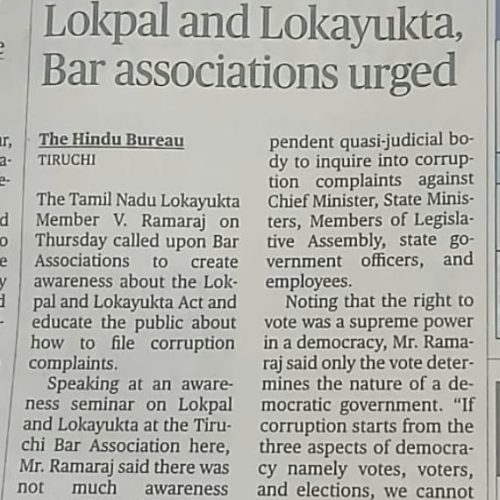
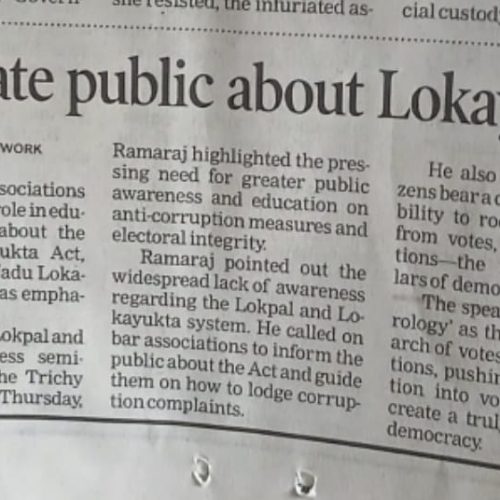
- Ramaraj stressed that citizens bear collective responsibility to root out corruption from votes, voters and elections are the foundational pillars of democracy” – Times of India, English daily, 06 November, 2025, Trichy Edition.
- Ramaraj said, “Right to vote was a supreme power in democracy. Only vote determines the nature of a democratic government. If corruptions start from three aspects of democracy namely votes, voters and elections, we cannot expect democratic government free from corruption” – The Hindu, English daily, 07 November, 2025, Trichy Edition.
- “Ramaraj opined that corruption in voting during elections would destroy democracy and lead to dictatorship. Since voterology helps protect voters from corruption in elections, it should therefore be taught in schools and colleges” – The New Indian Express, English daily, 06 December, 2025, Madurai Edition.
Contact Us
Email Address
[email protected]
Send your message via WhatsApp to 91-9487665454